Origins of Palm Sugar
The history of palm sugar in Indonesia is deeply intertwined with the culinary traditions of Southeast Asia. Made from the sap of the Arenga pinnata (palm tree), this natural sweetener has been known and used for centuries.
The palm tree is native to the tropical regions of Asia, stretching from India to the Philippines. This is why the tradition of processing palm sap into sugar existed among local communities long before the arrival of outside influences.
Early Development of Palm and Brown Sugar
Over time, the people of the Indonesian archipelago began processing not only palm sap but also coconut and sugarcane into various types of sweeteners. Historical records indicate that brown sugar made from palm and coconut sap became an important trade commodity between Asia, the Middle East, and Europe as early as the first centuries AD.
Traditional Palm Sugar Production
Even today, many palm sugar producers in Indonesia continue to preserve traditional production techniques that have been passed down through generations. The process typically involves three main stages:
-
Tapping the sap – Farmers climb tall palm trees to collect sap from the male flower clusters.
-
Boiling – The sap is boiled in large pans for several hours until it thickens and turns golden brown.
-
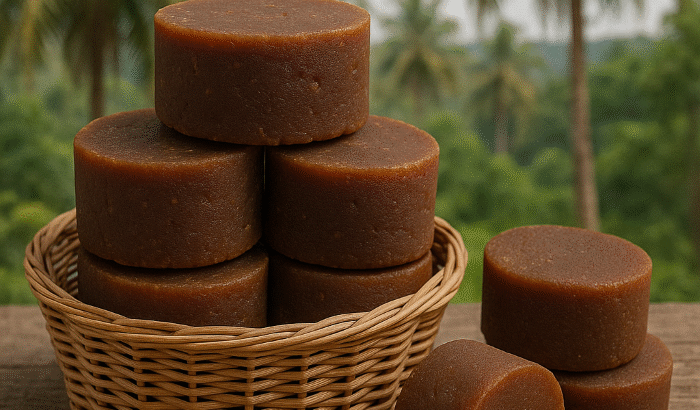
Molding – Once thickened, the syrup is poured into molds made from coconut shells or bamboo to harden into solid palm sugar blocks.
This time-honored process not only produces a distinctive taste but also reflects the cultural identity of local farming communities.
Cultural Significance and Local Wisdom
The palm tree holds deep cultural meaning in Indonesian society. Many local legends and folktales describe the origin and importance of this tree, showing its integral role in traditional life.
Almost every part of the palm tree is useful:
-
The sap is used to make sugar and natural sweeteners.
-
The fibers are crafted into ropes and household tools.
-
The leaves and fronds are used in traditional medicine and crafts.
This multifunctional nature of the palm tree highlights the close connection between nature, livelihood, and culture in Indonesian communities.
Modern Developments and Innovations
In the modern era, palm sugar has evolved into two main product types:
-
Molded Palm Sugar: The traditional block or shell form commonly found in local markets.
-
Powdered Palm Sugar: A refined, easy-to-use version that appeals to both domestic and international consumers.
Despite the introduction of modern technology in the sugar industry, traditional palm sugar production remains strong across many regions of Indonesia. This resilience represents the enduring spirit of tradition and local craftsmanship.
Conclusion
The history of palm sugar in Indonesia is more than just the story of a natural sweetener — it’s a reflection of heritage, sustainability, and cultural pride. From ancient villages to global markets, palm sugar continues to embody the sweetness of Indonesia’s rich traditions and its commitment to preserving local wisdom.
