Understanding the Difference Between Palm Sugar and CoconutSugar
In Indonesian kitchens, palm sugar and coconut sugar are two familiar natural sweeteners. They’re inseparable from many traditional dishes and drinks — from kolak, rujak, and sayur asem to cakes and even modern coffee latte with palm sugar.
Many people think palm sugar (gula aren) and coconut sugar (gula merah) are the same. It’s understandable since both have a brownish color and are often molded in similar traditional shapes. However, if you look closer, they’re actually quite different — especially in terms of their raw ingredients.
Even though both are often called “gula merah” or “Javanese sugar”, knowing their key differences helps you choose the right sweetener to enhance your recipes.
Here are six main differences between palm sugar and coconut sugar that you should know.
1. Source of Sap (Main Ingredient)
This is the most fundamental difference — the type of tree sap used determines the kind of sugar produced.
- Palm Sugar (Aren Sugar): Made from the sap of the arenga palm (Arenga pinnata). The sap is tapped from the male flower clusters of the palm tree.
- Coconut Sugar: Made from the sap of coconut flower buds (Cocos nucifera). The sap is collected from unopened flower clusters of the coconut tree.
- Cane Brown Sugar: In some regions like West Sumatra, brown sugar made from sugarcane juice is also called saka. Unlike refined white sugar, it’s made using a simpler, more natural process.
2. Color and Appearance
Although both are brown, there’s a noticeable difference in their shade and texture.
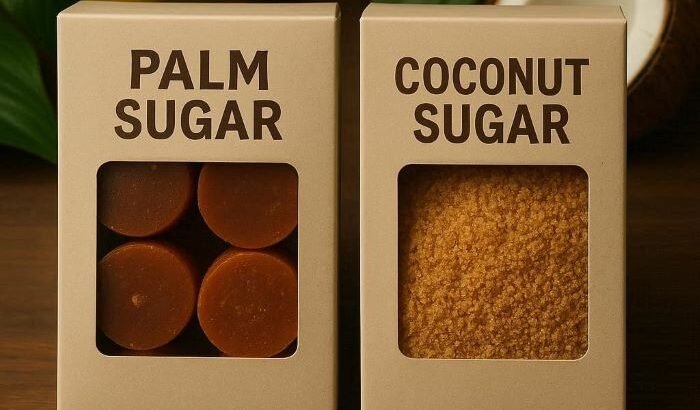
- Palm Sugar: Darker, deeper brown, often close to black.
- Coconut Sugar: Usually lighter in color — reddish brown or golden brown.
3. Aroma and Flavor
This is the most striking difference you’ll taste right away.
- Palm Sugar: Has a rich, fragrant aroma with smoky, caramel-like notes. The flavor is deeper, more complex, and lingers pleasantly.
- Coconut Sugar: Has a mild sweetness with a slight savory hint from the coconut. Its aroma is gentle and not overpowering.
- Cane Brown Sugar: Smells and tastes similar to refined brown sugar.
4. Texture
You’ll notice the texture difference when cutting or melting the sugar.
- Palm Sugar: Softer and smoother, making it easier to shave or melt when heated.
- Coconut Sugar: Tends to be harder, sometimes slightly grainy or crystalline.
5. Culinary Uses
Because of their different flavors and aromas, each sugar has its ideal use in the kitchen.
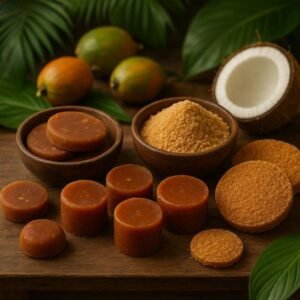
- Palm Sugar: Best for drinks and desserts that highlight a rich, aromatic sweetness — like palm sugar coffee, es cendol, bubur sumsum, or klepon.
- Coconut Sugar: Perfect for daily cooking that doesn’t need a strong aroma — such as rujak sauce, gudeg, or fillings for traditional cakes.
6. Price and Availability
Palm sugar is generally more expensive because collecting its sap is more challenging — often done in remote forest or highland areas.
- Palm Sugar: Pricier due to its limited production and harder harvesting process.
- Coconut Sugar: More affordable and widely available.
Quick Comparison Table
| Aspect | Coconut Sugar | Palm Sugar |
|---|---|---|
| Source | Sap from coconut or sugarcane | Sap from arenga palm |
| Color | Light brown or reddish | Dark brown to nearly black |
| Aroma | Mild and subtle | Strong, fragrant, slightly smoky |
| Flavor | Sweet with a hint of coconut | Deep, rich, caramel-like sweetness |
| Texture | Harder, slightly grainy | Soft and easy to melt |
| Use | Everyday cooking | Drinks and desserts |
| Price | More affordable | Higher due to rarity |
Which One Is Better?
There’s no absolute answer — both are natural, unrefined sweeteners and much healthier than refined white sugar.
- Choose palm sugar if you want a stronger aroma and deep caramel sweetness for drinks or desserts.
- Choose coconut sugar for everyday dishes that need a gentle sweetness without overpowering flavor.
In the end, both sugars bring a touch of Indonesia’s rich culinary heritage to every bite and sip.
