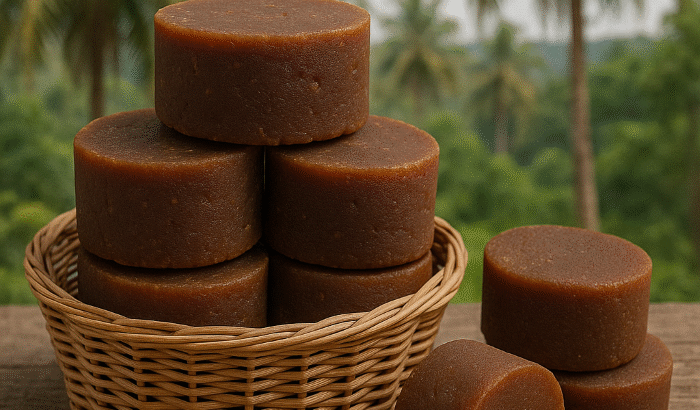
As a natural sweetener made from the sap of the Arenga palm tree, palm sugar (known locally as gula aren) is gaining popularity among health-conscious consumers. Unlike refined white sugar, this traditional sweetener has been part of Indonesian culinary heritage for centuries, offering a rich flavor and natural sweetness without artificial additives.
It’s no surprise why palm sugar is becoming the preferred choice. Its deep caramel-like sweetness, combined with higher nutritional content compared to refined sugar, makes it not only tastier but also more wholesome. Plus, its unique aroma adds a touch of luxury to even the simplest dishes.
However, as demand increases, fake palm sugar has also entered the market. Some are made from genuine palm sugar mixed with white sugar or chemical additives, while others are simply cane sugar colored and flavored to mimic real palm sugar. To get the full health benefits, it’s essential to know how to tell the real from the fake.
Characteristics of Authentic Palm Sugar
-
Color
Real palm sugar has a dark brown to almost blackish hue, often uneven. The center may appear lighter, while the edges are darker. Fake palm sugar tends to have a uniform light brown color. -
Texture
Authentic palm sugar is grainy, coarse, and easy to crumble when pressed. The surface feels slightly rough or sandy. In contrast, fake palm sugar is usually hard, smooth, and glossy, resembling refined sugar. -
Aroma
Genuine palm sugar gives off a distinct sweet aroma from the palm sap (nira aren). Fake ones often have a faint smell or no aroma at all. -
Taste
The taste of real palm sugar is naturally sweet and rich without bitterness or throat irritation. Fake palm sugar tends to taste overly sweet, artificial, and can leave a bitter aftertaste. -
Solubility in Water
When dissolved in hot water, authentic palm sugar melts evenly and produces a dark brownish-black solution. Fake versions dissolve faster and create a lighter, yellowish solution due to the presence of white sugar. -
Crystals
Real palm sugar has irregular, larger crystals, while fake palm sugar typically has small, uniform crystals. -
Price
Authentic palm sugar is usually more expensive, reflecting its traditional production process that requires time and skill.
How to Differentiate Real and Fake Palm Sugar
-
Fire Test
Place a small piece on a spoon and heat it gently. Real palm sugar will melt and release a caramel aroma, while fake palm sugar may smell like plastic or chemicals. -
Water Test
Dissolve palm sugar in hot water. Genuine palm sugar produces a dark, rich-colored liquid, while fake palm sugar results in a lighter, yellowish solution. -
Taste Test
Try a small piece. Real palm sugar tastes naturally sweet with no bitterness, while fake ones often have an artificial sweetness and chemical aftertaste.
Tips for Buying Authentic Palm Sugar
-
Purchase from trusted suppliers or local producers.
-
Check the color, texture, and aroma to match the characteristics of real palm sugar.
-
Perform the fire, water, or taste test before buying in bulk.
By understanding the key characteristics and simple tests to identify genuine palm sugar, you can ensure you’re choosing the best natural sweetener — one that’s healthier, richer in flavor, and true to Indonesia’s traditional heritage.
