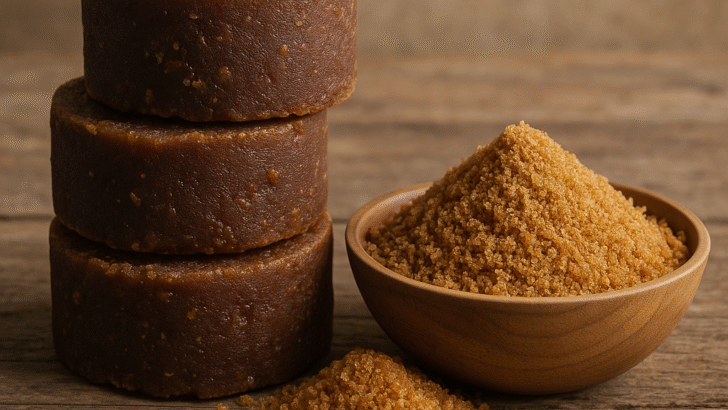
Palm sugar is a natural sweetener made from the sap of palm trees (enau), which is unique because of its brown color and sweet taste with a slight distinctive aroma. This sugar is processed without chemicals and undergoes minimal processing so that it still contains vitamins and minerals, making it a more natural sweetener alternative than granulated sugar. Palm sugar is commonly used in traditional dishes such as porridge, compote, and beverages.
Form and Characteristics
Form: Available in solid form (often molded into half-circles) or liquid form.
Color: Tends to be brown or darker than palm sugar, but lighter than Javanese sugar.
Taste: Has a sweet taste with a distinctive aroma and a slightly bitter taste.
Manufacturing Process
Tapping Sap: Sap (sweet liquid) is taken from the male flower clusters of the palm tree after being tapped to release more liquid.
Processing: The sap is then heated and molded, usually using coconut shells, to form solid palm sugar.
Benefits and Uses
Natural Sweetener: Used in various traditional dishes and drinks because of its distinctive taste.
Nutritional Content: Contains more vitamins and minerals such as vitamins B1, B2, B3, and vitamin C than granulated sugar, and is a source of energy due to its carbohydrate content.
Sweetener Alternative: Considered more natural and has a lower glycemic index than white sugar, making it safer for diabetics, as long as it is consumed wisely.
